

Learning Organization
What is a Learning Organization
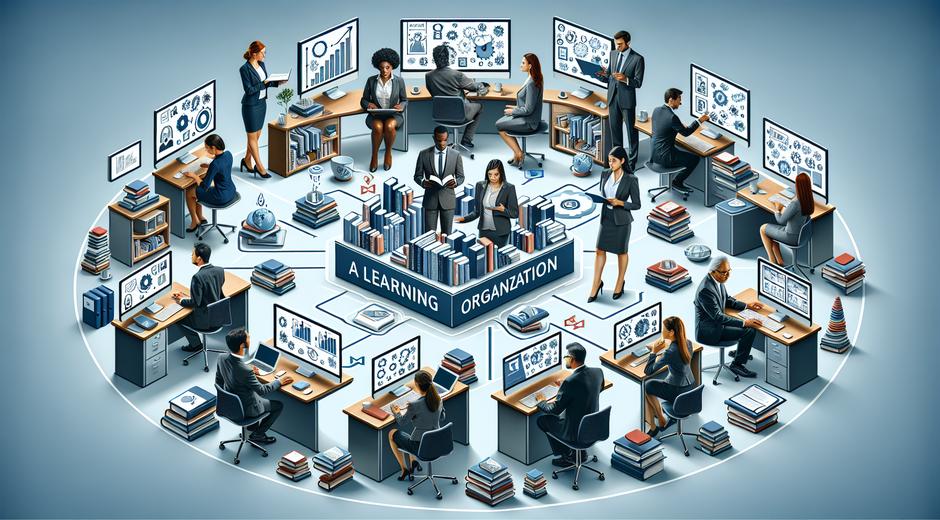
A learning organization is a workplace where continuous learning shapes strategy culture and daily practice. It is an entity that adapts and thrives because people at every level constantly gain knowledge share insights and apply new approaches. The concept goes beyond training events. It creates systems that encourage asking questions testing ideas and reflecting on outcomes so that improvement is built into routine operations.
Key Characteristics of a Learning Organization
Several defining traits distinguish a learning organization from a traditional workplace. First there is a strong culture of inquiry where curiosity is encouraged and mistakes are treated as opportunities to learn. Second knowledge flows freely rather than being siloed. Third leaders model learning by admitting what they do not know and by investing time in exploration. Fourth the organization links learning to purpose so that new knowledge advances core goals. Finally systems are in place for rapid feedback so teams can iterate and refine work quickly.
Why Learning Organization Thinking Matters for Modern Teams
In an era of rapid change surviving on past success is not enough. Organizations that learn circulate fresh ideas accelerate innovation and respond faster to market and social signals. Employees who experience continuous learning report higher engagement and perform at higher levels. When strategy is aligned with learning the whole organization becomes more resilient and more creative in solving complex problems.
Core Practices to Build a Learning Organization
Creating a learning organization requires deliberate practices that weave learning into everyday work. Start by making psychological safety a priority so people feel safe to speak up and test new ideas. Establish regular reflection rituals such as after action reviews or brief retrospectives to capture lessons from projects. Promote cross team exchanges so diverse perspectives combine to form new solutions. Invest in systems that capture institutional knowledge so insights are preserved and amplified. Encourage leadership development that focuses on coaching listening and facilitation rather than only command and control.
Practical Steps Leaders Can Take
Leaders play a crucial role in enabling a learning organization. Step one is to model learning by sharing what they are reading experimenting with and learning from. Step two is to create time and space for team members to pursue learning goals and to apply new knowledge to real initiatives. Step three is to support small experiments where teams can test hypotheses and measure results. Step four is to reward learning behaviors such as curiosity knowledge sharing and cross team collaboration. Finally leaders should measure learning outcomes and use that data to refine approaches.
How to Make Learning Relevant and Actionable
Learning becomes powerful when it is tied to actual work. Align learning objectives with strategic priorities so that training and exploration directly influence performance. Use project based learning where teams solve real problems and document what worked and what did not. Create mentoring and peer coaching networks to transfer tacit knowledge. Use technology to track progress and to make learning resources easy to find and to apply. When learning is hands on and connected to outcomes people see value and continue to engage.
Measuring the Impact of a Learning Organization
Measurement helps leaders know if the effort is paying off. Look beyond simple participation metrics and focus on outcomes such as rate of process improvement time to adoption of new practices and employee retention related to development opportunities. Use pulse surveys to assess how safe people feel asking questions and how often teams reflect on lessons learned. Track innovation metrics like number of prototypes tested or experiments run and link them to business results. Qualitative stories of transformation are also powerful indicators that learning is embedded.
Common Obstacles and How to Overcome Them
Many organizations want to learn but face obstacles. Time pressure often leaves little space for reflection. To address this create protected time blocks for learning and make experimentation part of workflow rather than an add on. Knowledge hoarding can prevent learning from spreading. Incentivize sharing and build systems that make insights easy to capture and to access. Resistance to change is another barrier. Start with small wins that demonstrate how learning improves outcomes and use those examples to build momentum. Finally avoid one size fits all training. Tailor learning to roles and to immediate challenges to maximize relevance.
Examples of Learning Organization Practices
Leading organizations use varied practices to sustain learning. Some use structured weekly learning huddles where teams share micro lessons. Others run internal conferences that allow cross functional groups to present experiments and findings. Peer coaching programs scale knowledge transfer while digital knowledge bases preserve institutional memory. Another effective practice is rotating people across teams to broaden experience and to break down silos. Even small practices such as a shared channel for daily insights create cumulative benefits over time.
Tools and Resources to Support a Learning Culture
Technology can accelerate learning when it connects people and preserves knowledge. Learning management platforms discussion forums and shared document repositories are useful when they are easy to search and to navigate. Micro learning formats such as short videos or quick job aids work well for busy teams. For inspiration on practical parenting ideas and family learning hacks visit CoolParentingTips.com which offers approachable guidance that can spark broader conversations about informal learning at home and at work. For further guidance on skills and study strategies across topics visit studyskillup.com where you will find tools and articles to support continuous learning in many areas.
Creating a Sustainable Learning Engine
Sustainability comes from embedding learning into governance and into performance systems. Make learning goals part of team plans and include learning contributions in performance conversations. Create budgets for exploration and for capturing lessons from experiments. Build a governance rhythm that reviews learning metrics at leadership meetings and that allocates resources based on those insights. Over time these structures normalize learning and make it a repeatable capability rather than a one time initiative.
Conclusion
Becoming a learning organization is a strategic choice that yields stronger culture faster innovation and better adaptability. It requires leadership commitment clear practices and systems that make learning part of everyday work. By fostering psychological safety linking learning to purpose and measuring impact organizations can transform knowledge into sustained performance. Start small with rituals that surface lessons then scale what works. The result is an organization that not only survives change but that shapes the future through continuous learning.